

Car Accidents
Torrance Car Accident Lawyer
A crash on the 405 or a broadside on Hawthorne can end with a totaled car, an ER visit, and weeks of missed work. Meanwhile the other driver's insurer is already building its case to pay you as little as possible. Our Torrance car accident attorneys handle the fault fight, the insurance tactics, and the paperwork so you can focus on getting better.
The call is free and there is no pressure. You owe us nothing unless we recover money for you.
Torrance Roads
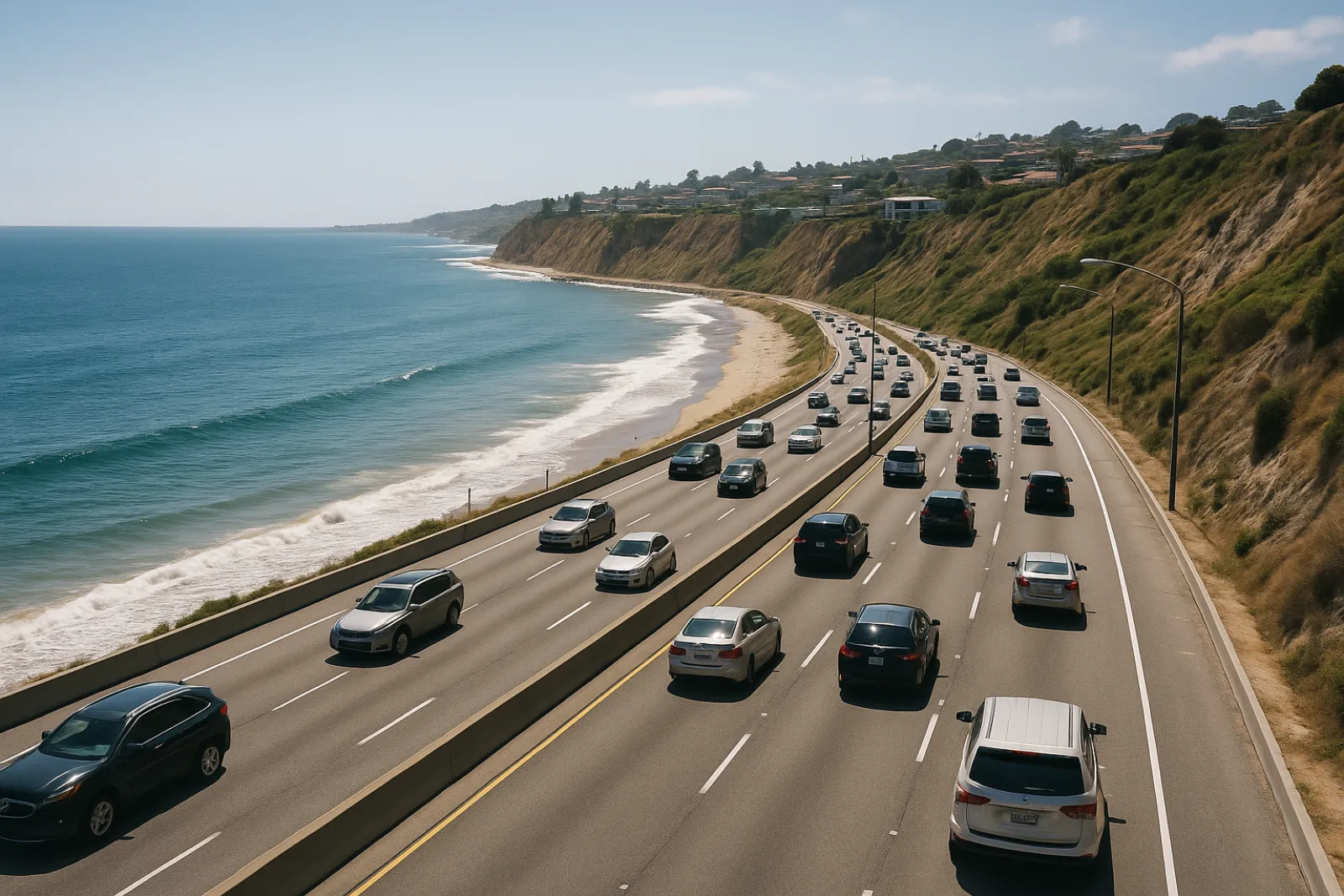
The Corridors Where Torrance Crashes Cluster
Knowing the road matters. The way a crash happens on a congested freeway differs from a turning collision at a busy boulevard, and it shapes how we prove fault. These are the routes we see come up again and again.
Pacific Coast Highway (Hwy 1)
PCH carries heavy traffic through Torrance with frequent signals, turning conflicts, and cross traffic. Rear-end and left-turn collisions cluster where the highway meets busy cross streets.
Hawthorne Boulevard
One of the city's main commercial arteries, Hawthorne mixes shoppers, delivery trucks, and steady through traffic. Its wide intersections see a share of broadside crashes.
Crenshaw and Del Amo Boulevards
These crosstown routes feed the shopping districts and neighborhoods. Distracted turns into and out of parking lots are a recurring cause of collisions here.
I-405 and I-110 (San Diego and Harbor Freeways)
The 405 and 110 bracket the area with stop-and-go congestion. High closing speeds and sudden slowdowns produce chain-reaction and lane-change crashes that cause serious injuries.
First Steps
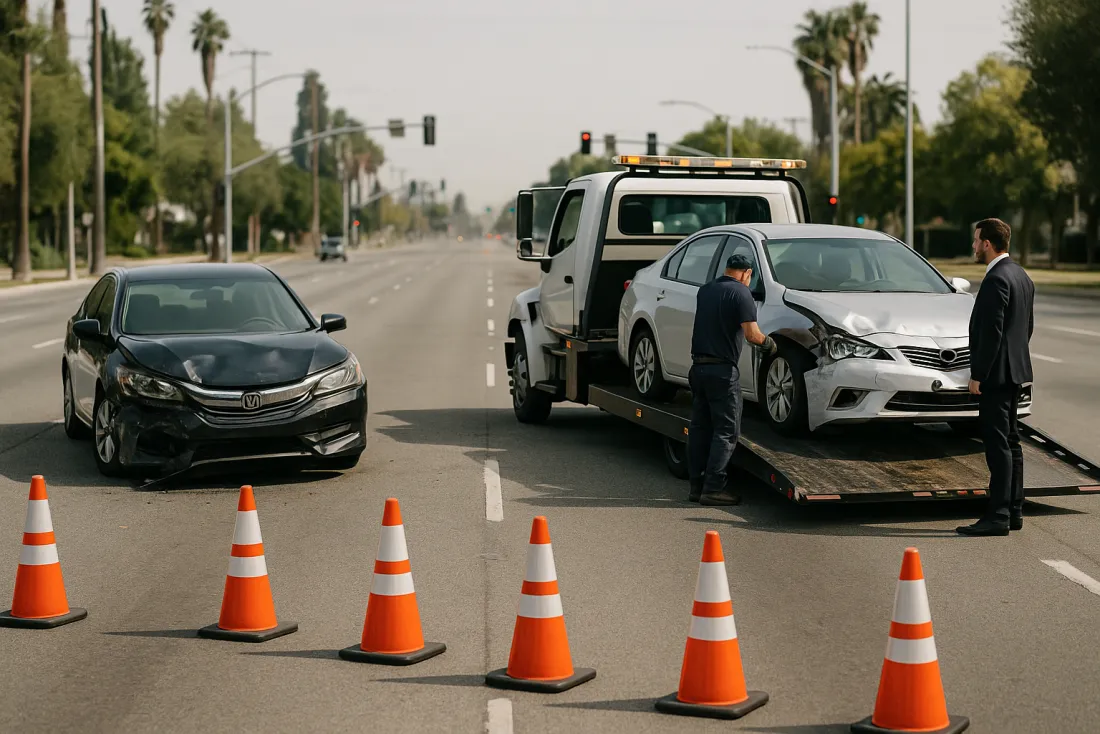
What to Do in the Hours After a Torrance Crash
Get checked by a doctor
Adrenaline hides injuries. Whiplash, concussions, and internal injuries can surface a day or two later. A prompt exam protects your health and your claim.
Document everything you can
Photos of the vehicles, the road, skid marks, and your injuries. Names and numbers of witnesses. The other driver's insurance and plate.
Report it
California requires a report to the DMV for crashes with injury or significant property damage. A police or CHP report also creates an early, neutral record.
Be careful with the other insurer
The at-fault driver's insurer may call fast and friendly, asking for a recorded statement. You are not required to give one, and it rarely helps you.
Fault in California
Comparative Fault: Why the Blame Fight Decides the Money
California is a pure comparative negligence state. A jury assigns each party a percentage of fault, and your recovery drops by your share. There is no cutoff. Even if you were mostly to blame, you can still collect for the portion that was the other driver's fault. That rule cuts both ways, and insurers use it aggressively.
Here is how it plays out. Say your damages come to 100,000 dollars and the insurer convinces a jury you were 25 percent responsible for changing lanes into a gap that was too small. You recover 75,000. Now you can see why the adjuster works so hard to pin more of the crash on you. Every point of fault they shift is real money out of your pocket.
Our job is to push back with the facts: the police report, the physical damage, the road geometry, phone records that show the other driver was distracted, and, where it helps, an accident reconstruction. We do not let a lazy fault call go unchallenged.
Know the Playbook
How the Other Side Tries to Pay You Less
The fast, low offer
A check arrives before you know if you need surgery. Sign the release and the claim is closed for good, even if your back gets worse.
The recorded statement
A friendly adjuster asks you to describe the crash on tape, then uses an offhand "I'm fine" against you later.
The treatment-gap argument
If you waited a week to see a doctor, they claim you were not really hurt. Life gets in the way, but the gap becomes their talking point.
Blaming a pre-existing condition
They dig up an old back complaint and argue the crash changed nothing. A prior injury does not erase a new one, and we make sure the record shows it.
Uninsured and Underinsured Drivers
When the At-Fault Driver Cannot Cover What They Broke
A lot of drivers on Southern California roads carry the state minimum or no insurance at all. If one of them hits you, the at-fault policy may run out long before your medical bills do. That is what uninsured and underinsured motorist coverage is for. It sits on your own auto policy and pays when the other side cannot.
The catch is that a UM/UIM claim is against your own insurer, and it will still scrutinize the claim like any other. Reading the policy limits, stacking coverage where the law allows, and meeting the notice requirements takes care. We handle those claims so a coverage gap does not become your problem.
Ask About Your Coverage
Common Questions
Torrance Car Accident Questions
Yes. California follows pure comparative negligence, so your recovery is reduced by your percentage of fault rather than barred. If you are 30 percent responsible for a rear-end crash on the 405, you still collect 70 percent of your damages. Insurers inflate your share of blame because it directly cuts what they pay, which is exactly why the fault fight matters.
This is where your own uninsured and underinsured motorist coverage steps in. Many drivers do not realize they carry UM/UIM protection that pays when the at-fault party has no coverage or not enough. We read your policy closely, because insurers do not always volunteer that a benefit applies to your situation.
Two years from the date of the crash for a personal injury lawsuit under Code of Civil Procedure section 335.1. If a city bus, a government vehicle, or a public road defect played a role, you may have just six months to file a claim under Government Code section 911.2. Missing either deadline can end the case before it starts.
Be cautious. Early offers tend to arrive before anyone knows the full cost of your injuries, and once you sign a release, you cannot reopen the claim if you need more surgery later. Have a lawyer value the case, including future medical care and lost earning ability, before you accept anything.
No honest lawyer can quote a number on day one. Value depends on the severity of your injuries, the treatment you need, your lost income, how fault shakes out, and the available insurance. We build the number from your actual medical records and losses, not a formula, and Torrance-area cases are filed at the Torrance Courthouse on Maple Avenue.
More Torrance Injury Help
Other Torrance Injury Practice Areas
Read our statewide California car accident page, or go back to the Torrance personal injury overview.
Get Started
Free Consultation
Free Case Evaluation
Find out if you have a case — takes 2 minutes