


Car crash injuries can range from cuts and bruises to serious conditions such as whiplash, traumatic brain injuries, spinal cord injuries, and internal bleeding. While some injuries are obvious, others may take hours or days to appear. If you’ve been injured in a car accident, it’s important to get checked by a doctor as soon as possible. Prompt medical care can identify hidden injuries and create records that may support your legal claim.
At HillGuard Law, our team has recovered over $10 million for clients across more than 500 personal injury cases. Founding partner David E. Jacobson brings over 15 years of experience representing people injured by someone else’s negligence. If you were injured in a car crash, our attorneys can investigate your accident, handle negotiations with the insurance company, and pursue the compensation you deserve. Contact us today for a free consultation to discuss your case and learn about your legal options.
This article explains common car crash injuries, their symptoms, treatment options, and the steps you can take to protect your health and injury claim.
Why Are Car Crash Injuries So Serious?
The force of a car accident can change your life in seconds, causing serious injuries or even death. According to the Centers for Disease Control and Prevention, “Motor vehicle crashes remain a leading cause of death in the United States, with more than 120 people killed in crashes every day.” The human body is fragile, so even a crash that seems minor can cause severe pain and lasting complications.
The severity of your injuries depends on factors such as the speed of the vehicles, the direction of the impact, and which parts of your body absorb the force. In a rear-end collision, where one vehicle hits another from behind, the sudden impact can cause the body to jerk forward and backward. This movement can lead to injuries such as whiplash, neck strain, and back pain.
Head-on collisions are among the most dangerous types of crashes. The combined force of both vehicles at impact can cause severe injuries. Occupants may strike parts of the vehicle or, if unrestrained, be ejected. Common injuries include fractures, brain injuries, and internal damage. Side-impact (T-bone) crashes can also be dangerous because the impact directly affects areas like the head, chest, and pelvis. Rollover accidents are another serious type of crash, often causing victims to be thrown around inside the vehicle. These crashes can cause injuries like spinal cord damage, traumatic brain injuries, knee injuries, and broken bones.
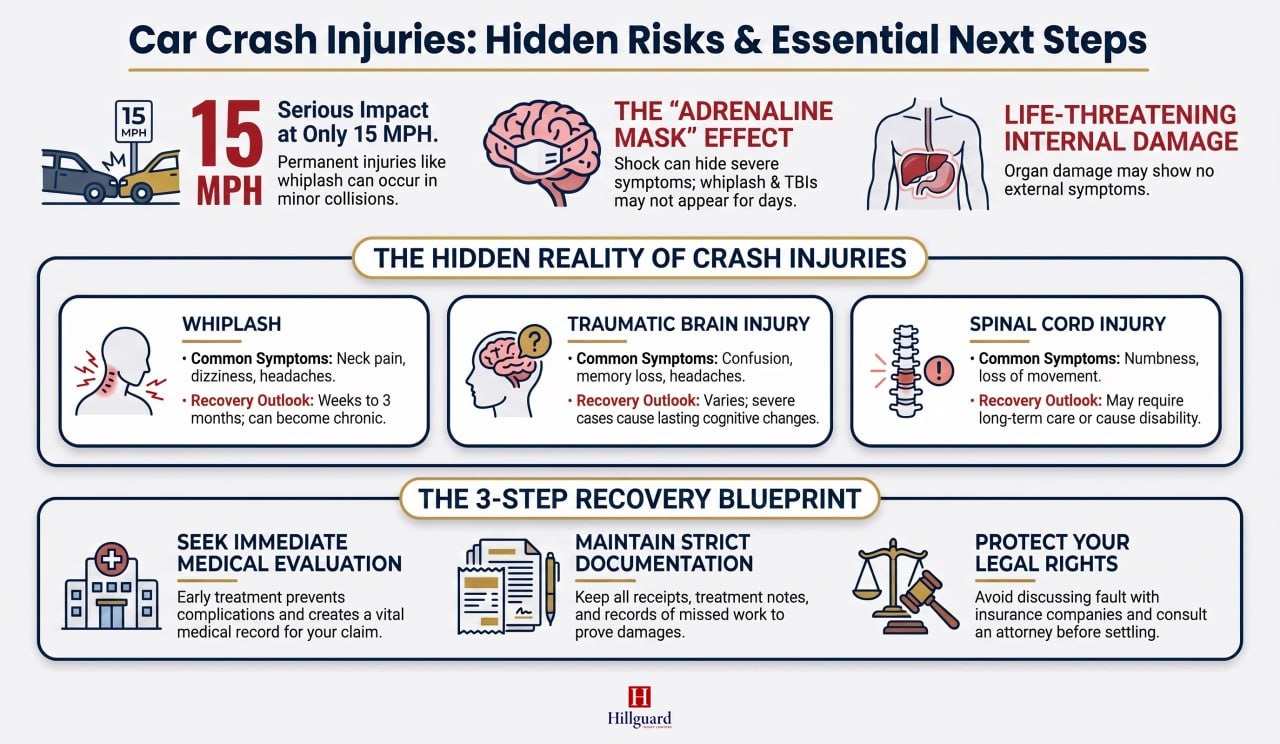
The severity of these injuries can depend on factors like seat belt use, airbag deployment, and how the body reacts during the crash. Some injuries may not appear immediately because adrenaline and shock can hide symptoms. If you experience pain, stiffness, headaches, or other changes after an accident, seeking medical care can help identify injuries early and protect your health.
11 Common Injuries in a Car Crash
The injuries caused by a car crash can vary depending on the force and severity of the collision. Below are some of the most common injuries victims experience and the symptoms to watch for after an automobile accident.
1. Whiplash

Whiplash is one of the most common car crash injuries, especially after rear-end collisions. It happens when the neck is suddenly jolted back and forth during impact. Symptoms may appear within six hours to three days and may include neck pain, stiffness, headaches, and dizziness. Most people recover within a few weeks to three months of treatment, while severe cases may require longer time periods.
2. Traumatic Brain Injuries (TBI)
A car crash can cause head trauma ranging from concussions to severe brain injury. Mild TBI may lead to headaches, dizziness, confusion, and memory issues, while more serious injuries can affect a person’s ability to speak, move, or complete daily tasks. Some victims recover quickly, while others may experience long-term effects that impact their quality of life.
3. Neck Injuries
Neck injuries are common after a car crash and can include sprains, muscle strains, and herniated discs. These injuries can put pressure on nearby nerves, causing pain, stiffness, numbness, or weakness. Treatment depends on the severity and may include physical therapy, medications, or surgery. Recovery can take weeks or several months.
4. Back and Spinal Cord Injuries
Spinal cord and back injuries are also common after car crashes. They can range from painful fractures to serious spinal cord damage that affects movement and sensation. While physical and pain management therapy may help with recovery, severe injuries can lead to partial or complete paralysis, impacting daily activities, work life, and independence.
5. Broken Bones
A collision can put extreme pressure on the body, leading to broken bones in areas like the arms, legs, ribs, pelvis, and face. Some fractures heal with a cast or brace, while more serious injuries may require surgery and months of rehabilitation. These injuries can affect mobility and make everyday activities like walking, eating, or breathing more difficult.
6. Soft Tissue Injuries
Soft tissue injuries affect the muscles, tendons, and ligaments after a car crash. They can include sprains, strains, torn ligaments, and other muscle injuries. These injuries may not appear on an X-ray but can still cause pain, swelling, and stiffness. Recovery can take weeks or months, depending on the severity.
7. Internal Injuries
Internal injuries are among the most serious injuries after a car crash. Usually, this is because organ damage and internal bleeding may not show immediate symptoms but can become life-threatening without treatment. Internal injuries can damage organs like the liver and spleen, so seeking medical attention after a collision is important, even if you feel fine at the moment.
8. Chest Injuries
The force of a car crash can cause chest injuries from the impact of the seat belt, steering wheel, or dashboard. These injuries may include bruises, broken ribs, or lung damage. While seat belts help prevent serious harm, they can still cause painful injuries that may require weeks to recover.
9. Facial and Dental Injuries
A car crash can cause dental and facial injuries when the face hits the dashboard, steering wheel, or other objects inside the motor vehicle. Victims may suffer broken teeth, jaw fractures, eye injuries, or facial lacerations due to broken glass from impact. These injuries often require prompt treatment and may involve dental procedures or reconstructive care to restore function and appearance.
10. Burn Injuries
Burn injuries are less common than injuries like whiplash, fractures, or soft tissue damage, but they can be some of the most severe. They may occur when a crash causes a vehicle fire, fuel leak, or contact with hot surfaces. Serious burns may require surgical correction, extensive treatment, skin grafts, and long-term care, especially when they affect mobility and daily life.
11. Psychological Injuries
A car accident is not always physical. Many victims experience emotional challenges like PTSD, anxiety, depression, or a fear of driving after a crash. Psychological recovery may take longer than physical recovery from injuries, but with proper support, counseling, and therapy, these injuries can be treated and managed over time.
What Are the Symptoms You Should Never Ignore After a Car Accident?
Some injuries may not be immediately noticeable after a car accident, sometimes due to shock and adrenaline. Regardless, it is important to seek immediate medical care. Common symptoms like persistent headaches, confusion, or memory problems could be signs of a traumatic brain injury and should never be ignored. Ongoing neck or back pain may point to issues such as whiplash, herniated discs, or other spinal injuries.
Symptoms like numbness or tingling, difficulty walking, chest pain, or shortness of breath should never be ignored because they may indicate nerve damage, spinal injuries, broken ribs, or problems involving the heart or lungs. Even if the pain seems manageable, these warning signs can become more serious without proper medical evaluation.
Abdominal injuries or pain after a crash can also be a concern, as it may signal internal bleeding or damage to organs that is not visible from the outside. If you experience any of these symptoms after an accident, seek medical attention quickly. It can help you identify injuries early and give you the best chance at recovery.
What Should You Do After Suffering a Car Accident?

The National Highway Traffic Safety Administration (NHTSA) estimates that 39,345 people died in motor vehicle crashes in the United States in 2024. If you’re a car accident victim, it is normal to feel stressed and unsure of what to do next. Following the right steps early can make your recovery easier and help you recover damages.
Step 1. Call 911: It is important to contact emergency services after a car crash, especially if someone has been injured or the crash was severe. Emergency responders can provide medical care and document the scene.
Step 2. Seek Immediate Medical Care: Whether your injuries are visible, minor, or severe, it is important to seek emergency medical treatment. Early treatment can help prevent complications and support smooth recovery.
Step 3. Follow Your Treatment Plan: It is important to attend all medical appointments, follow your doctor’s recommendations, and complete any prescribed therapy or rehabilitation after an accident. Staying consistent with your care can improve your recovery and create a record of your injuries.
Step 4. Document Your Injuries: Keep records of your medical visits, treatments, and recovery progress after the accident. Detailed documentation can help show the impact of your injuries and support a legal claim, if any.
Step 5. Keep Medical Records and Receipts: Make copies of medical bills, prescriptions, treatment notes, and other accident-related expenses. These records can help track your recovery and support your compensation claim.
Step 6. Avoid Discussing Fault: Be mindful of the conversations you have with at-fault drivers and insurance companies after an accident. Admitting blame or making certain statements before the facts are fully reviewed could be used against you.
Step 7. Contact a Personal Injury Attorney: An experienced attorney can review your case and help you understand your legal options. They can handle communication with insurance companies and work to pursue the compensation you may deserve.
What Is the Impact of Different Car Crash Injuries?
Car collision injuries can vary widely in severity, symptoms, and recovery time. The table below provides a quick comparison of common injuries and their potential effects.
| Injury Type | Common Symptoms | Recovery & Long-Term Effects |
|---|---|---|
| Whiplash | Neck pain, stiffness, headaches, dizziness | Often improves within weeks or months, but some cases cause chronic pain. |
| Traumatic Brain Injuries (TBI) | Headaches, confusion, memory problems | Recovery varies; severe cases may cause lasting cognitive or physical changes. |
| Neck Injuries | Pain, stiffness, numbness, weakness | May require therapy and can lead to ongoing nerve problems. |
| Back and Spinal Injuries | Back pain, weakness, numbness, loss of movement | Severe cases may require long-term care and can cause permanent disability. |
| Broken Bones | Pain, swelling, bruising, limited movement | Healing may take weeks or months, with some injuries requiring surgery. |
| Soft Tissue Injuries | Muscle pain, swelling, stiffness | Often improve with specialized treatment but may cause lasting discomfort. |
| Internal Injuries | Pain, weakness, dizziness, fainting | May require urgent care and can become life-threatening without treatment. |
| Chest Injuries | Chest pain, bruising, breathing difficulty | Recovery depends on severity and may involve ongoing complications. |
| Facial & Dental Injuries | Broken teeth, cuts, jaw pain | May require dental work or reconstructive treatment. |
| Burn Injuries | Severe burns, skin damage, pain, blistering | Less common but may require long-term treatment and leave scarring. |
| Psychological Injuries | Anxiety, PTSD, depression, fear of driving | Treatment can help, but emotional effects may last after the crash. |
What Are the Common Misconceptions About Injuries From a Car Crash?
People often assume that if they feel fine after a car crash, then they do not need medical care. However, some injuries, such as whiplash, soft tissue damage, and traumatic brain injuries, may not show symptoms immediately. Pain may also take time to appear, which is why seeking medical attention is important even when injuries are not obvious.
Another common misconception is that only severe crashes cause serious injuries. Even low-speed collisions can lead to lasting pain and limited mobility. Whiplash can occur at speeds as low as 15 mph. Understanding the possible effects of a car crash can help you recognize symptoms early and get the right treatment.
How Can Car Accident Injuries Affect Your Personal Injury Claim?
Injuries sustained from a car accident can affect the value of your personal injury claim. Compensation may depend on the physical, financial, and emotional impact of the crash. Medical expenses like emergency care, doctor visits, medication, and rehabilitation play an important role in determining your damages.
Serious injuries can also affect your ability to work, leading to lost wages and reduced income during your recovery. If your injuries require future medical care or ongoing treatment, those expected costs may also be considered when seeking compensation.
Beyond financial losses, a personal injury claim may account for chronic pain and suffering caused by the accident, including the emotional impact of living with an injury. In cases involving permanent disability, the claim may also consider the long-term effects on your daily life and loss of earning capacity.
How Long Can It Take to Recover From a Car Accident Injury?
There is no fixed timeline for recovering from a car accident injury. Recovery depends on factors like the type of injury, its severity, your age, and overall health. Minor injuries, such as mild whiplash or soft tissue damage, may improve within weeks, while serious injuries like head injuries, fractures, or spinal cord damage can take months or longer.
The treatment you receive can also affect how quickly you recover. Getting medical care early, following your doctor’s advice, and completing rehabilitation needs can help restore strength and mobility. While some people make a full recovery, others may require continued treatment for injuries that have lasting effects.
When Should You Contact a Car Accident Lawyer?

Knowing when to contact a car accident attorney can help protect your rights after a crash. If you suffered more severe injuries that require medical treatment, rehabilitation, or time away from work, an attorney can help you understand your legal options and pursue compensation.
Legal counsel can also be valuable when liability is disputed or an insurance company challenges your claim. A lawyer can handle negotiations, protect your interests, and help address issues like delayed payments or unfair settlement offers.
If your injuries result in long-term disability, reduced earning capacity, or ongoing medical needs, an attorney can help account for these future damages. In wrongful death cases, a lawyer can also help families seek compensation for medical costs, funeral expenses, and other losses.
Need a Car Injury Lawyer?
If you were injured in a car accident, getting medical care and documenting your losses are important steps to help protect your claim. At Hillguard Injury Lawyers, we always say, “A well-documented case can significantly improve your chances of winning.” Injuries from a crash can go beyond physical pain, leading to financial burden, long-term treatment needs, and other challenges that may affect your daily life.
If another driver’s negligence caused your injuries, you may be entitled to compensation for your losses. A car injury lawyer can help you understand your legal options, deal with insurance companies, and pursue the right offer for the losses you have suffered.
At HillGuard Law, our personal injury attorneys in California have recovered millions of dollars for injury victims and handled hundreds of personal injury cases. We know what it takes to build a strong claim, negotiate with insurance companies, and help you pursue the compensation you may deserve. If you were injured due to another driver’s negligence, contact us for a free consultation to discuss your case and understand your legal options.
Frequently Asked Questions
Car accidents often leave victims with questions about their injuries, recovery, and legal options. Below are answers to some common questions about car crash injuries and personal injury claims.
What Is the Most Common Injury in a Car Accident?
Whiplash is one of the most common injuries in rear-end car accidents. It occurs when the neck is suddenly forced back and forth, causing pain, stiffness, headaches, and reduced range of motion.
Can Injuries Appear Days After a Car Crash?
Yes. Some car crash injuries, like whiplash and soft tissue injuries, can appear days or even weeks after the accident due to shock and adrenaline.
Should I See a Doctor Even if I Feel Fine?
Yes, it is a good idea to see a doctor after a car accident, even if you feel fine at first. Some serious injuries may not show symptoms immediately, and early medical evaluation can help identify problems before they worsen.
Which Injuries Typically Result in the Highest Settlements?
Injuries involving traumatic brain injuries, spinal cord damage, permanent disability, or long-term medical care often result in higher settlements. Ultimately, the value of a claim depends on factors such as severity, medical expenses, lost income, and the impact on your quality of life.
How Long Does It Take to Recover From Whiplash?
With proper treatment, you can recover from whiplash within a few weeks to three months. However, severe cases may take longer to heal and can lead to ongoing pain or limited movement.
Can I Recover Compensation for Emotional Trauma After a Car Accident?
Yes, you may be compensated for emotional trauma caused by anxiety, depression, or post-traumatic stress disorder (PTSD). The value of this claim depends on the details of your case and the impact of the trauma on your life.
Legal Disclaimer
Disclaimer: This blog is for general educational purposes only and should not be considered legal advice. Every car accident case is different, and the outcome of a claim depends on the specific facts and circumstances involved. If you have been injured in a car accident, consider speaking with a qualified personal injury attorney to understand your rights and legal options.