


The time limit for filing a personal injury claim in California is set by the statute of limitations and is around two years from the date of the injury. A personal injury claim is the first step in seeking compensation for your injuries. This is typically handled through insurance companies and may result in a settlement without going to court. A personal injury lawsuit, on the other hand, is filed in court when a fair settlement cannot be reached through negotiation. Lawsuits tend to take longer due to legal proceedings, discovery, and potential trials.
If you’ve been injured due to someone else’s negligence, you may be wondering how long it will take to settle your personal injury case. The truth is that the timeline varies depending on multiple factors. These factors include the severity of injuries, liability disputes, insurance company negotiations, court backlogs, etc.
Navigating a personal injury case can be overwhelming, but you don’t have to do it alone. At Hillguard Injury Lawyers, we have experts with experience in various practice areas who can help you fight for the compensation you deserve. Schedule a free consultation with us today!
This post will take you through the various steps involved in a personal injury lawsuit and let you know how long such a lawsuit takes to settle. It will also go in-depth into the various factors that can affect the timeline of a personal injury lawsuit.
How Long Does a Personal Injury Lawsuit Take to Settle?

While some personal injury cases settle in a few months, others take years, especially if they go to trial. Here’s a closer look at the personal injury lawsuit process to help you prepare for what to expect and make informed decisions about your case.
Pre-Litigation Phase (Weeks to Months)
The first stage of a personal injury lawsuit begins with medical treatment and gathering evidence. Seeking medical attention immediately after an accident is necessary, as medical records play a vital role in proving liability and calculating damages.
During this phase, police reports, witness statements, and other documentation are collected to establish what happened. Many personal injury claims settle before a lawsuit is even filed, particularly if the at-fault party’s insurance company offers a fair settlement early in the process. However, insurance companies often attempt to minimize payouts, which is why it’s essential to consult an experienced personal injury attorney as soon as possible.
Investigation & Case Preparation (1-3 Months)
Once a personal injury lawyer takes on a case, they conduct a thorough investigation to build a strong legal claim. Attorneys review medical records, accident reports, and any available evidence that can establish liability.
They may work with investigators to collect surveillance footage, interview additional witnesses, and consult expert witnesses such as medical providers or accident reconstruction specialists. This phase is important because it determines the strength of the case and the potential settlement value. Without strong evidence, insurance companies are less likely to offer fair compensation.
Negotiation and Demand Letter (1-3 Months)
After gathering sufficient evidence, personal injury attorneys draft a demand letter outlining the injured party’s medical treatment, lost wages, pain and suffering, and other damages. This letter is sent to the insurance adjuster, requesting a specific settlement amount.
The goal of this phase is to negotiate a fair settlement without having to file a lawsuit. However, insurance companies frequently use tactics such as lowball offers or unnecessary delays to pressure victims into accepting less than they deserve. Having the right legal representation can make a significant difference in countering these tactics and securing maximum financial compensation.
Insurance Response & Initial Settlement Talks (Several Weeks to Months)
Once the insurance company receives the demand letter, they may accept, reject, or counter the request. Many personal injury claims are settled at this stage, especially if liability is clear and the damages are well-documented.
However, insurance carriers often attempt to reduce payouts by disputing the severity of injuries or shifting blame to the injured person. A skilled personal injury lawyer will push back against these tactics by presenting additional medical history, expert opinions, and other evidence. If a fair settlement cannot be reached, the case may proceed to litigation.
Filing a Lawsuit (Several Months to Over a Year)

If settlement negotiations fail, filing a personal injury lawsuit is the next step. This officially begins the litigation process and involves submitting a formal complaint in civil court.
The at-fault party, known as the defendant, is served with legal documents, including a summons and a copy of the lawsuit. This does not mean the case will go to trial as many personal injury cases settle after a lawsuit is filed. However, litigation adds legal deadlines, court involvement, and additional steps that can extend the timeline of an injury lawsuit.
Discovery Phase (6-12 Months)
During the discovery process, both sides exchange evidence, interview witnesses, and gather expert opinions. Attorneys may request depositions, where involved parties answer questions under oath. Interrogatories, or written questions, are also used to clarify details about the accident and injuries.
This phase allows both legal teams to assess case strengths and weaknesses, influencing future settlement negotiations. In complex cases involving multiple parties, discovery can take over a year, further delaying the settlement process. Cases such as slip and fall accidents often require detailed discovery due to disputed liability.
Mediation and Settlement Negotiations (Several Weeks to Months)
Mediation is a formal negotiation process where a neutral mediator facilitates discussions between both sides. Many personal injury cases settle at this stage to avoid the risks and costs of trial. Attorneys present evidence, highlight the financial recovery needed for medical bills and lost wages, and push for fair compensation.
However, not all cases resolve in mediation. If the insurance company refuses to offer a reasonable settlement agreement, the case proceeds to trial.
Trial (1+ Year, if Necessary)
If a settlement is not reached, the case moves to trial, which can take over a year to complete. The trial process includes jury selection, opening statements, witness testimonies, cross-examinations, and closing arguments before a verdict is reached.
Personal injury trials are unpredictable as some plaintiffs receive substantial financial compensation, while others walk away with nothing. This uncertainty is why most personal injury cases settle before reaching this stage. While a trial can potentially result in a higher payout, the legal process is lengthy, and court awards are not guaranteed.
Post-Trial & Appeals (Months to Years, if Applicable)
In some cases, the losing party may file an appeal, further delaying compensation. Appeals involve reviewing legal errors rather than retrying the case, meaning a decision can take months or even years. Plaintiffs waiting for financial recovery may face additional hardships during this time.
This is another reason why having an experienced personal injury attorney is important. They can guide injured victims through settlement negotiations and trial proceedings while advocating for the best possible outcome.
Average Timeline for Different Types of Personal Injury Cases
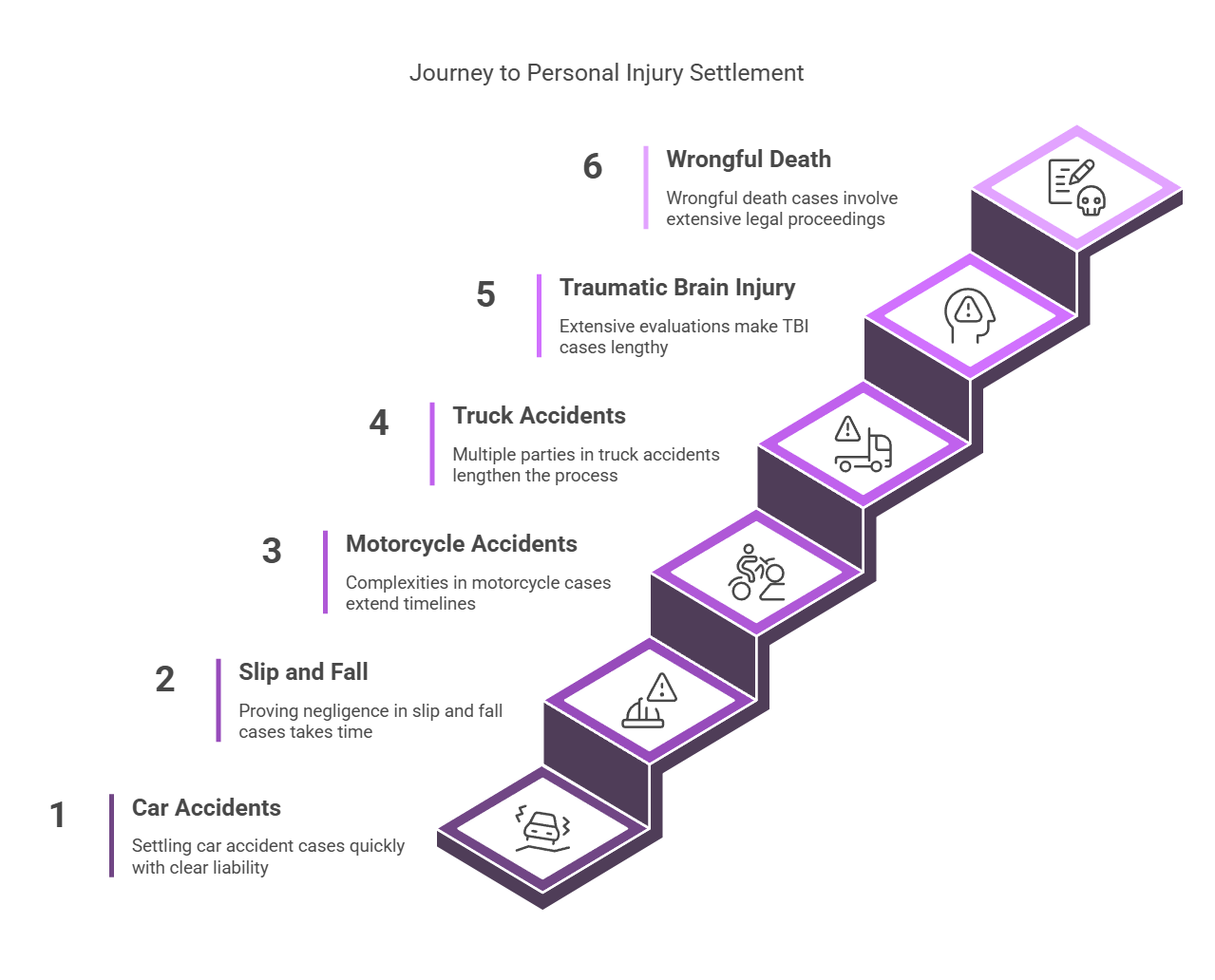
The timeline for settling a personal injury lawsuit depends on the complexity of the case, the severity of injuries, and the willingness of insurance companies to negotiate. Here’s an overview of how long different types of personal injury cases typically take:
Car Accidents (6-18 Months)
Car accident cases with clear fault and minor injuries often settle quickly within six to twelve months. However, if there are serious injuries or disputes over liability, the process can extend to 18 months or longer.
Slip and Fall Cases (12-24 Months)
Slip and fall cases take longer because businesses and property owners frequently contest liability. Proving negligence and gathering medical evidence can prolong settlement negotiations, often extending the timeline to one to two years.
Wrongful Death Lawsuits (1-4+ Years)
Wrongful death claims take longer due to higher claim values and complex legal proceedings. These cases often involve extensive investigations, expert testimonies, and prolonged settlement discussions, making them last anywhere from one to four years or more.
Motorcycle Accident Cases (6 Months – 2+ Years)
For motorcycle accidents, cases with minor injuries and clear liability may settle in as little as six to twelve months. However, if the accident involves severe injuries like head trauma or spinal cord damage, or if the insurance company disputes liability, the case can extend beyond two years.
Broken and Fractured Bone Injury Cases (6-18 Months)
Simple fractures with minimal medical complications often settle within six to twelve months. However, if the injury requires multiple surgeries, extensive rehabilitation, or results in long-term complications, the timeline can extend to 18 months or longer.
Truck Accident Cases (1-3+ Years)
Truck accident cases are often more complex due to multiple liable parties, severe injuries, and federal trucking regulations. These factors contribute to longer legal battles, often lasting one to three years or more.
Traumatic Brain Injury (TBI) Cases (1-4+ Years)
TBI cases take longer due to the need for extensive medical evaluations, expert testimony, and long-term prognosis assessments. Because the stakes are high, insurance companies often fight these claims aggressively, extending the timeline to several years.
Factors That Affect the Timeline of a Personal Injury Lawsuit

The time it takes to settle a personal injury lawsuit varies widely based on several factors. While some personal injury cases resolve within months, others take years to reach a settlement or go to trial.
The severity of injuries plays a big role in determining how long a personal injury lawsuit will take. More serious injuries require extensive medical treatment, rehabilitation, and long-term care, which can delay settlement negotiations. Victims must often reach maximum medical improvement (MMI) before agreeing to a settlement, as this ensures all medical expenses and long-term costs are accounted for. For example, a broken bone injury case may take longer to settle if surgeries and physical therapy are needed.
If fault is clear, personal injury claims can be settled more quickly. However, if liability is disputed, additional investigations, expert testimony, and legal arguments are required to establish responsibility. Insurance companies may deny liability or argue that the injured party shares some responsibility for the accident, which can significantly delay the case. Cases involving multiple parties or complex circumstances also take longer to resolve as each side presents evidence to prove liability.
Insurance companies often use delay tactics to minimize payouts in personal injury cases. They may initially offer a low settlement, dispute medical treatment costs, or require extensive documentation before making an offer. Settlement negotiations can take weeks or months, depending on the insurer’s willingness to negotiate a fair settlement. If the insurance company refuses to offer fair compensation, the case may proceed to litigation, further extending the timeline.
If a personal injury lawsuit moves to court, the timeline can be affected by the legal system’s backlog. Courts often have busy schedules, and personal injury cases must go through multiple stages, including discovery, mediation, and pre-trial motions, before reaching a resolution. Delays in court proceedings can add months or even years to the overall case timeline, making settlements a more appealing option for many plaintiffs.
Importantly, having the right legal representation can make a significant difference in how long a personal injury lawsuit takes. An experienced personal injury attorney understands how to build a strong case, negotiate effectively with insurance companies, and navigate the legal process efficiently. Victims who work with a skilled lawyer may be able to reach a fair settlement faster.
Should You Settle or Go to Court for Your Injury Case?

One of the most important decisions in a personal injury lawsuit is whether to accept a settlement or go to trial. While most personal injury cases settle out of court, some proceed to trial if the parties cannot agree on a fair settlement.
Settling a personal injury claim provides a quicker resolution and guarantees financial compensation without the uncertainty of a trial. Insurance companies often prefer settlements to avoid the cost and risk of litigation. However, settlement amounts may be lower than what a jury could potentially award in a court case.
Going to trial can result in higher compensation, but it comes with risks. Trials take longer, involve legal fees, and do not guarantee a favorable outcome. Plaintiffs must also wait months or years for a court date, followed by additional time for a judge or jury to reach a verdict. While a successful trial can lead to a larger payout, the uncertainty and length of the process deter many victims from pursuing this route.
How to Speed Up the Personal Injury Settlement Process in California
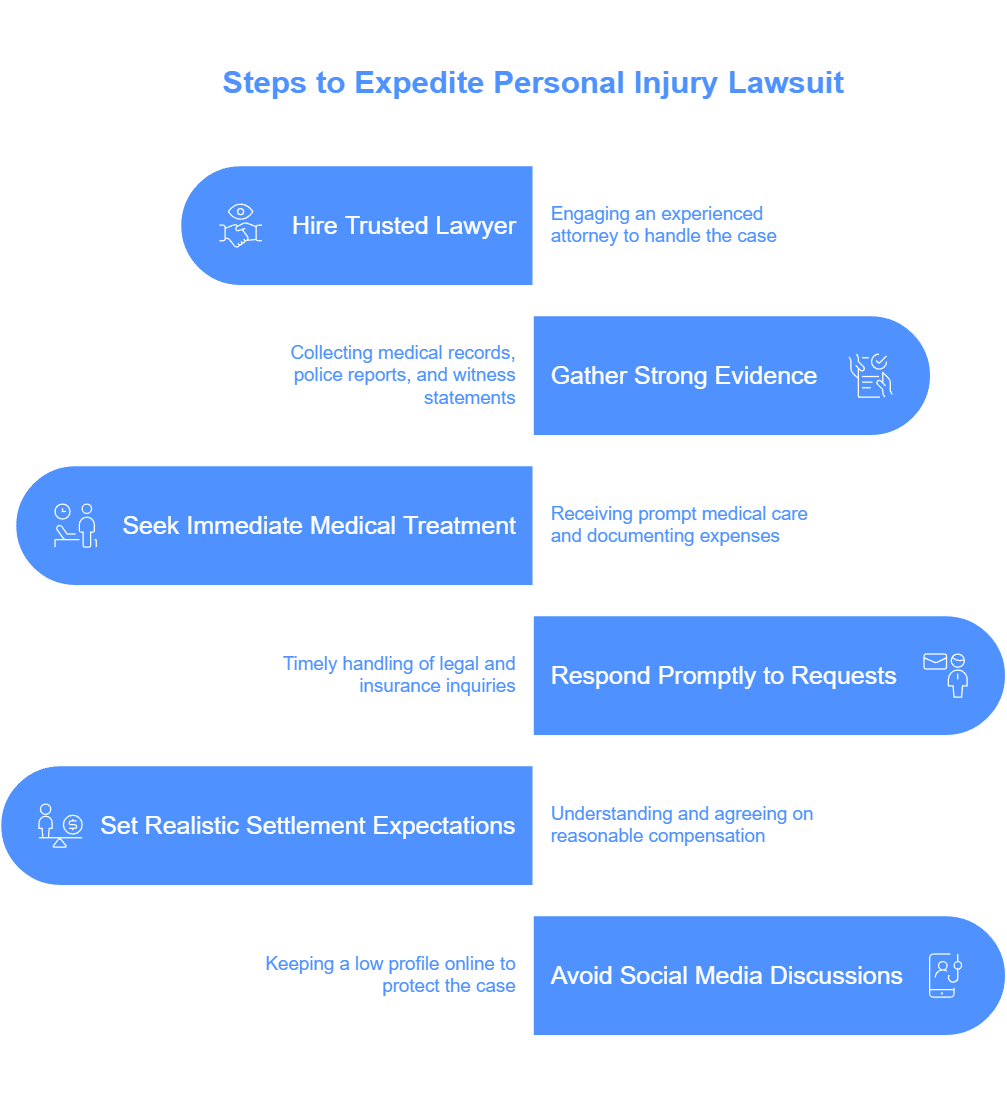
While some factors in a personal injury lawsuit are beyond a plaintiff’s control, there are steps victims can take to speed up the process and secure fair compensation more efficiently. Generally, hiring a trusted personal injury lawyer is one of the most effective ways to expedite a claim. An experienced attorney can handle negotiations, file legal documents promptly, and push back against insurance company delays. Many law firms operate on a contingency basis, meaning they only get paid if they win the case.
Gathering strong evidence early in the process can also help. Victims should collect medical records, police reports, witness statements, and any other relevant documentation to support their claim. The more evidence available, the stronger the case and the faster it can be resolved.
Furthermore, seeking medical treatment immediately after an accident is essential for both health and legal reasons. Delaying medical care can not only worsen injuries but also give the insurance company a reason to dispute the claim. Documenting all medical expenses and following doctors’ recommendations can help ensure fair compensation.
Responding promptly to legal and insurance requests can also keep the case moving forward. Delays in submitting paperwork, answering inquiries, or scheduling medical evaluations can prolong settlement negotiations.
Being realistic about settlement expectations is also important. While every victim deserves fair compensation, holding out for an unrealistically high settlement can extend the case unnecessarily. A personal injury lawyer can provide guidance on what constitutes a reasonable settlement offer based on the specifics of the case.
Finally, avoiding social media discussions about the case can prevent potential setbacks. Insurance companies and defense attorneys often monitor social media profiles for statements or photos that could be used to challenge the claim. Staying off social media or being cautious about what is posted can protect the integrity of the lawsuit.
How Much Do Most Personal Injury Cases Settle For?

The value of a personal injury settlement varies widely depending on the severity of the injury, liability factors, and the insurance coverage available. While some cases settle for just a few thousand dollars, others result in multi-million-dollar payouts. Compensation for accident injuries are determined by medical expenses, lost wages, pain and suffering, and the overall impact of the injury on the victim’s life.
For cases involving minor injuries such as soft tissue damage, sprains, or whiplash, settlements typically range between $3,000 and $15,000. These cases often involve short-term medical treatment and minimal long-term effects, making them quicker to resolve.
However, moderate injury cases that involve broken bones, concussions, or injuries requiring ongoing medical treatment usually fall within the $15,000 to $75,000 range. The exact amount depends on the length of recovery, medical bills, and whether the victim suffers any long-term limitations.
Serious personal injury cases, such as those involving traumatic brain injuries, spinal cord damage, or permanent disability, often result in settlements exceeding $100,000. These cases require extensive medical treatment and rehabilitation, and may include compensation for lifelong care and lost earning capacity. Some catastrophic injury claims can reach millions if the victim faces permanent impairment or requires lifelong medical support.
Let Our Personal Injury Attorneys Fight for You
Navigating a personal injury lawsuit can be overwhelming, especially when dealing with medical treatment, lost wages, and insurance company tactics aimed at minimizing your compensation. However, patience and skilled legal representation are necessary in securing the fair settlement you deserve. Many personal injury cases take time to resolve, but having an experienced attorney on your side ensures that every aspect of your case is thoroughly investigated and strategically handled.
If you have suffered an injury due to someone else’s negligence, seeking professional legal advice is essential. Every case is unique, and an attorney can provide personalized guidance on the best course of action for maximizing your compensation.
At Hillguard Injury Lawyers, we fight for your rights and ensure you do not get less than you deserve. Schedule a free consultation now to speak with an attorney who can help you move forward!


