

Broken Bones & Fractures · Los Angeles County
Los Angeles Broken Bone Lawyer
A fracture sounds simple until you are the one in the cast — the surgery, the screws, the weeks off work, the follow-up that says the bone is not healing the way it should. A wreck on the 405, a fall on a broken stairway, a bike knocked down on a downtown street: any of them can leave you with a break that reshapes your months. At Hillguard Injury Lawyers, we represent people across Los Angeles whose fractures were someone else’s fault, and we make sure the claim reflects the real cost of the injury.
If another party’s negligence broke a bone, talk to us before the insurer talks you into a quick settlement. You pay nothing unless we recover for you.

Fractures Across the City
How Broken Bones Happen in Los Angeles
Los Angeles gives a broken bone plenty of ways to happen. The freeway grid — I-5, I-10, US-101, the 405, and the 110 — carries millions of vehicles through interchanges where a hard rear-end or a rollover can crush a wrist against the wheel or break a leg in the footwell. Off the freeways, the city’s aging sidewalks, apartment stairwells, and crowded storefronts produce a steady stream of trip-and-fall fractures, and the mix of scooters, bikes, and pedestrians on busy corridors adds its own toll.
The break itself ranges from a cracked rib in a low-speed collision to a shattered pelvis in a high-speed crash. What they share is that the injury rarely ends when the cast comes off. A fractured ankle can turn into arthritis; a broken arm repaired with a plate can need a second surgery to remove it.
When the injury is severe, care in Los Angeles often runs through a major trauma center — LAC+USC Medical Center, a Level I trauma facility near downtown, or Cedars-Sinai on the Westside. The operative reports and imaging from those hospitals become central to proving what broke and what it will take to recover.
Valuing a Fracture Claim
What Drives the Value of a Broken Bone Case
The Type of Fracture
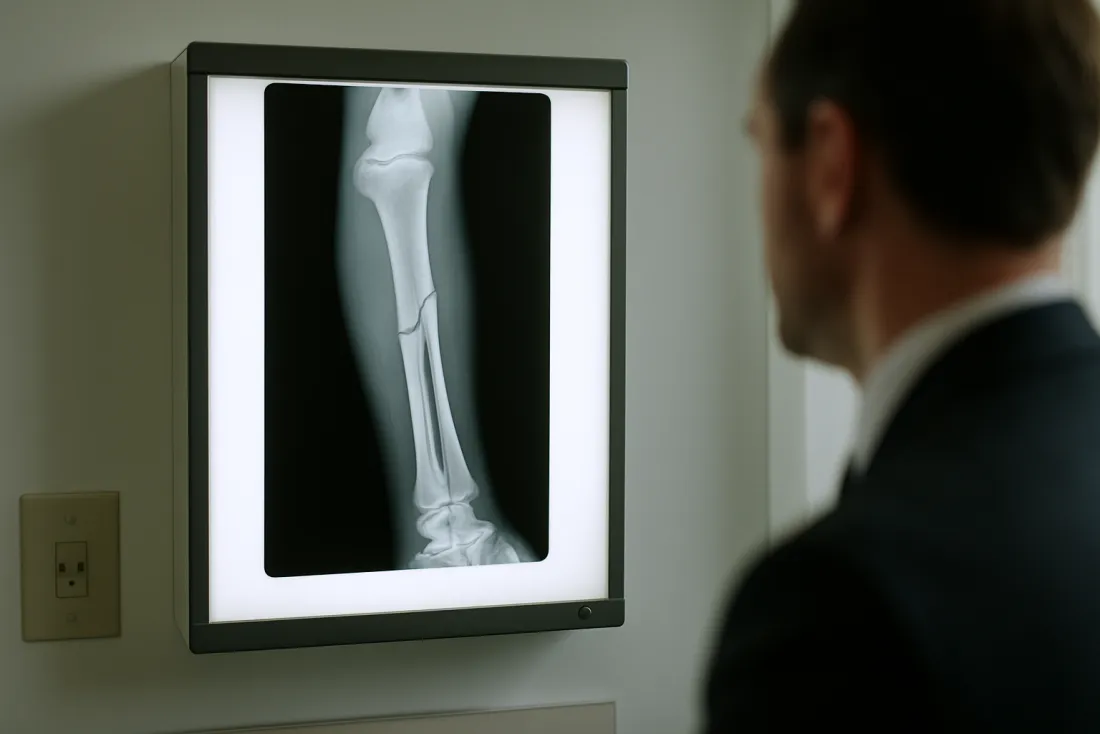
Not every break is equal. A simple, closed fracture stays aligned under the skin and often heals in a cast. A compound, open fracture breaks through the skin, raising the risk of infection and usually requiring surgery. A comminuted fracture shatters the bone into several fragments and typically needs hardware to rebuild. The classification shapes the treatment, the recovery time, and the value of the claim, and we make sure the record captures which one you actually suffered.
Surgical vs. Non-Surgical Treatment and ORIF Hardware
Some fractures heal with a cast and time. Others require open reduction and internal fixation — ORIF — where a surgeon realigns the bone and secures it with plates, rods, or screws. That hardware carries its own weight in a claim: the surgery itself, the possibility of a later operation to remove the hardware, and the permanent limitations it can leave behind. A settlement that treats a surgically repaired fracture like a minor cast case leaves real money on the table.
The Damages Timeline and Future Care
A fracture claim plays out over time. Early damages cover the ER visit, imaging, and surgery. But a bone can heal in the wrong position (malunion) or fail to fuse (nonunion), and joint fractures often lead to arthritis down the road — each of which can mean more treatment and lost income. California allows recovery for reasonable future medical care and lost earning capacity when they are supported by medical opinion, so we build the claim around the whole recovery, not just the first few bills.
The Deadline to File
California generally allows two years from the injury date to file suit, with a six-month notice requirement when a government entity is involved. Because complications can appear months after the break, getting a lawyer to value the future early protects you from settling for less than the injury will ultimately cost.
Know Your Break
Types of Fractures and Why They Matter
The word “fracture” covers everything from a hairline crack to a bone in pieces. Where the break falls on that spectrum drives your treatment, your recovery, and what the claim is worth.
Simple (Closed)
The bone breaks but stays under intact skin and usually keeps its alignment. Often treated with a cast, though location and displacement still matter.
Compound (Open)
Bone breaks through the skin, raising serious infection risk. These almost always need surgery and carry a longer, more complicated recovery.
Comminuted
The bone shatters into three or more fragments. Rebuilding it typically requires hardware, and full recovery is far from guaranteed.
Displaced
The broken ends shift out of line and must be reset. Displacement often pushes treatment from a simple cast toward surgical fixation.
Hairline (Stress)
A thin crack that may not show on the first X-ray. Minor on paper, but it can sideline you and worsen if it goes untreated.
Growth-Plate & Joint
Fractures at a joint or growth plate can leave lasting stiffness and arthritis, which is why their long-term value is easy to underrate.
Surgery and What Follows
From the Operating Room to Full Recovery
When a fracture will not heal straight in a cast, surgeons turn to open reduction and internal fixation. They open the site, line the bone back up, and lock it in place with plates, rods, or screws. The hardware does its job, but it also adds surgical risk, a long rehab, and sometimes a second operation months later to take it out.
Recovery rarely runs in a straight line. A bone can knit in the wrong position — a malunion — or fail to fuse at all, a nonunion that may need bone grafting to fix. Breaks that reach a joint often invite post-traumatic arthritis years down the road. Each of these turns a “healed” fracture into an ongoing problem, and each belongs in the claim.
That is why we do not rush to settle a broken bone case the moment the cast comes off. We wait until your surgeon can speak to where the recovery is actually headed.
Right After the Injury
What to Do After a Fracture in Los Angeles
Get proper imaging and follow the treatment plan, including the follow-up X-rays that show whether the bone is setting the way it should. Keep every discharge sheet, operative report, and physical therapy note. In a fracture case, the medical record is the case, and gaps in treatment give the insurer room to argue you recovered faster than you did.
If the break happened in a crash or a fall on someone’s property, document the cause too: photos of the scene, the hazard, the vehicles, and the names of any witnesses. Report a property fall to the owner or manager and ask for a written incident report.
Be wary of an early offer. Insurers like to close fracture claims before the risk of nonunion or hardware removal is known. Talk to a lawyer who will price the whole recovery before you sign.
Local Jurisdiction
Where a Los Angeles Case Is Heard & Treated
Los Angeles Superior Court
Los Angeles sits in LA County, so civil injury claims are filed with the Los Angeles Superior Court. The Stanley Mosk Courthouse downtown is the county’s primary civil courthouse. We manage the filing and scheduling in one of the nation’s busiest court systems.
Local Trauma Care
LAC+USC Medical Center, a Level I trauma center near downtown, and Cedars-Sinai on the Westside treat many of the area’s severe fractures. Their operative reports and imaging often anchor the medical proof in a broken bone claim.
How We Work
Building a Broken Bone Claim That Reflects the Real Injury
We Pin Down the Fracture and the Fault
X-rays and operative reports tell us what broke and how badly. The police report, surveillance video, and witness accounts tell us who caused it. We gather both before anything disappears.
We Track the Surgery and the Hardware
If you needed ORIF — open reduction and internal fixation with plates, rods, or screws — that hardware, its risks, and any planned removal all factor into the value of your claim.
We Project the Recovery, Not Just the Cast
A broken bone can heal wrong. We account for the risk of malunion, nonunion, hardware removal, arthritis, and repeat surgery, plus the wages you lose while you cannot work.
We Try the Case When the Offer Is Too Low
If the insurer treats a serious fracture like a minor sprain, we file in the Los Angeles Superior Court and prepare to put the injury in front of a jury.
Why Hillguard
A Broken Bone Lawyer Who Values the Whole Recovery
The difference in a fracture case is patience with the medicine. We read the operative reports, track the follow-up imaging, and wait for your surgeon’s read on where the bone is headed before we put a number on the claim. That keeps a serious break from being paid like a minor one.
We work on a contingency fee, so there is nothing to pay up front and nothing at all unless we recover for you. You get representation without adding to the bills already stacking up from the surgery and time off work.
Working across Los Angeles County, we know the Los Angeles Superior Court and how its crowded civil docket shapes timing and strategy. We handle the insurer and the paperwork, and we keep you informed in plain language the whole way through.
Related Help
More Ways We Represent Los Angeles Clients
California Broken Bone Lawyers
Our statewide fracture practice covers everything from a broken wrist to a shattered femur. See how we value surgical and long-term injury cases.
Learn MoreLos Angeles Personal Injury
Injured another way in LA? Our local personal injury team handles car crashes, slip and falls, and wrongful death across Los Angeles County.
Learn MoreCar Accident Lawyers
Many fractures start as a crash on the 5, the 10, or the 405. Our car accident team documents the collision behind your broken bone.
Learn MoreAll California Locations
We represent injured people across California, including every corner of LA County. Find your city or call us wherever the injury happened.
Learn MoreAll Practice Areas
Browse every injury matter our attorneys handle for clients in Los Angeles and throughout Southern California.
Learn MoreSlip and Fall Accidents
Falls on unsafe property cause a large share of the fractures we handle. We hold negligent owners accountable under California premises law.
Learn More
Common Questions
Los Angeles Broken Bone Questions
No. The type of fracture drives the value. A simple (closed) fracture where the bone stays aligned and the skin is intact is very different from a compound (open) fracture where bone breaks through the skin and carries infection risk, or a comminuted fracture where the bone shatters into several pieces and often needs hardware to rebuild. A hairline crack in a finger and a comminuted femur fracture are both broken bones, but they carry vastly different treatment, recovery, and value. We make sure your claim reflects the specific fracture you actually suffered.
ORIF stands for open reduction and internal fixation. A surgeon opens the site, realigns the bone (reduction), and holds it together with plates, rods, screws, or pins (fixation). It is common for displaced or comminuted fractures that will not heal properly in a cast. ORIF matters to your claim because it signals a serious injury, adds significant surgical cost, sometimes requires a second surgery to remove the hardware later, and can leave permanent limitations. A settlement that ignores the hardware and its future consequences undervalues the case.
Because healing is not the same as full recovery. A fracture can result in malunion, where the bone knits in the wrong position, or nonunion, where it fails to fuse at all — both of which can require additional surgery. Joint fractures often lead to post-traumatic arthritis years later. Time in a cast means lost wages, and a permanent loss of strength or range of motion affects work and daily life long after the X-ray looks healed. We build the claim around the full arc of the injury, not the moment the cast comes off.
Los Angeles is in Los Angeles County, and civil personal injury cases are heard in the Los Angeles Superior Court. The Stanley Mosk Courthouse in downtown Los Angeles is the county’s main civil courthouse and hears many injury matters. LA County has one of the busiest court systems in the country, which affects timing and strategy. We handle the filing, venue, and scheduling so your case moves as efficiently as the system allows.
You generally have two years from the date of injury to file a personal injury lawsuit in California, with a shorter six-month notice requirement if a government entity is involved. Recoverable damages typically include past and future medical costs — surgery, physical therapy, hardware removal — along with lost wages, reduced earning capacity if the injury limits your work, and pain and suffering. Because complications like nonunion or arthritis can surface later, it is worth having a lawyer value the future before you settle.
Get Started
Talk to a Los Angeles Broken Bone Lawyer
Free Case Evaluation
Find out if you have a case — takes 2 minutes
Broke a Bone Elsewhere in LA County?
We handle fracture and other serious injury cases across Los Angeles County and the rest of California. Wherever the injury happened, reach out and we will tell you where you stand.